

Using ai for ecommerce product descriptions allows online sellers on Amazon.ae, Noon, and independent storefronts to generate high-converting, compliant catalog content in a fraction of the traditional time. Whether you manage fifty SKUs or five thousand, artificial intelligence automates repetitive copywriting tasks, standardizes technical specifications, and localizes listings for multilingual customers across the Arabian Gulf.
Last updated: November 2026
What AI Does Well for Online Sellers
Modern machine learning models excel at pattern recognition, tone adaptation, and structured data extraction. For regional merchants handling seasonal inventory spikes—such as the massive surges during white Friday sales or Ramadan shopping rushes—AI removes the copywriting bottleneck by instantly drafting SEO-friendly features, bullet points, and marketing copy.
Beyond basic generation, language models summarize raw supplier data sheets into clean marketing points and format outputs into tables or JSON objects for inventory systems. However, human oversight remains essential to verify specifications, check local regulatory compliance, and ensure brand voice consistency across channels.
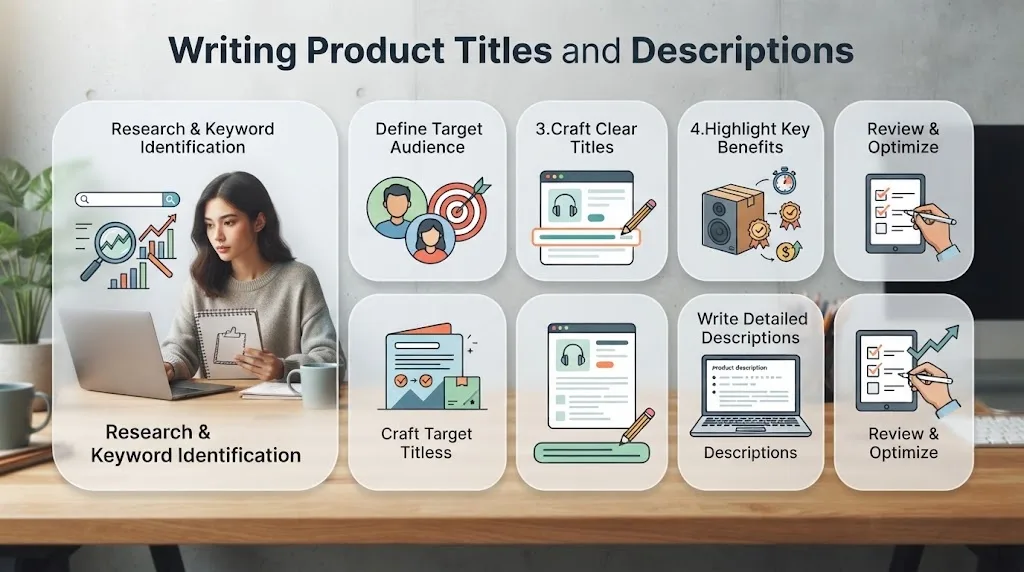
Writing Product Titles and Descriptions
Crafting high-ranking product titles requires balancing keyword density, character limits, and buyer intent. AI tools help structure titles by placing the brand, core item, size, and color in the optimal sequence demanded by search algorithms. When building descriptions, models turn dry manufacturer specs into engaging benefit-led paragraphs that address customer pain points directly.
For detailed guidance on structuring multi-language content workflows, exploring prompt templates can help standardize your catalog writing process across different product categories.
English and Arabic Versions
Sellers operating in the UAE, Saudi Arabia, and the wider GCC must cater to both English and Arabic search queries to capture maximum market share. While traditional translation tools often produce rigid, literal phrases, modern AI models handle cultural nuances and regional dialects naturally. For advanced localization strategies, refer to the guide on Arabic–English translation with AI (after publication).
When prompting models for bilingual listings, specify the target demographic—such as English speakers in Dubai or Arabic speakers in Riyadh—to ensure correct currency formatting, regional terminology, and appropriate cultural tone without awkward literal translations.
Bulk Listings from a Spreadsheet
Managing inventory across multiple marketplaces usually involves large product catalog spreadsheets filled with attributes, SKUs, and stock levels. Processing these files row by row is inefficient. By leveraging the best AI for Excel (after publication), merchants can upload CSV or XLSX sheets and apply automated formulas or prompt commands to generate descriptions for hundreds of items simultaneously.
To run bulk catalog workflows smoothly:
- Clean your raw supplier data table to remove duplicate columns and broken part numbers.
- Create a master prompt template that references specific table headers for item name, material, and dimensions.
- Export the generated model output back into your inventory management system after a manual spot-check.
Answering Customer Questions and Reviews
Customer trust heavily influences conversion rates on platforms like Amazon and Noon. AI assists support teams by drafting prompt, empathetic, and policy-compliant replies to recurring customer inquiries regarding sizing, warranty terms, and shipping times.
When analyzing product reviews, language models quickly categorize customer feedback into actionable insights—identifying recurring complaints about sizing or packaging. This helps merchants update their product descriptions proactively to answer common questions before the buyer even asks, reducing return rates.
Marketplace Rules You Must Follow
Every digital marketplace enforces strict content guidelines to protect consumers and maintain search quality. Violating these rules can lead to suppressed listings or account suspension. For comprehensive requirements, consult the official Amazon.ae Seller Central guidelines and local regulatory frameworks regarding consumer protection and commercial transparency.
Key compliance rules to keep in mind include:
- Never stuff irrelevant brand names or high-volume keywords into product titles.
- Avoid exaggerated performance claims, fake guarantees, or unverified medical/safety assertions.
- Ensure all specifications, electrical plug types, and warranty details match regional GCC standards.
Tip: Always run automated AI outputs through a final human compliance check to verify that all safety warnings and local tax rules are accurately represented.
Prompt Pack for Sellers
Use these copy-and-paste prompt structures to generate your e-commerce content efficiently:
- Product Title Generator: “Act as an e-commerce SEO expert. Write 3 optimized product titles under 100 characters for [Product Name], including core features: [Feature 1], [Feature 2], tailored for [Amazon.ae/Noon].”
- Bullet Point Enhancer: “Transform these raw supplier specs into 5 benefit-driven bullet points for an online store: [Paste specs here].”
- Arabic Localization Prompt: “Translate and culturally adapt this product description into professional marketing Arabic suitable for shoppers in Saudi Arabia and the UAE: [Paste English text here].”
FAQ
Can AI write product descriptions for both Amazon.ae and Noon simultaneously?
Yes. You can feed your base product specifications into an AI workspace and instruct the model to format the output according to the specific character limits and structural requirements of each separate platform.
How do I ensure my AI-generated Arabic descriptions sound natural?
To avoid unnatural literal translations, provide the model with context about your target buyer’s region (such as the UAE or Saudi Arabia) and specify a professional retail tone rather than asking for a literal word-for-word translation.
Can I process an entire product catalog spreadsheet at once?
Yes, by using AI tools that support file uploads, you can upload structured CSV or Excel spreadsheets containing your inventory data and prompt the model to generate descriptions for all rows in bulk.
Are there risks of keyword stuffing when using AI for SEO listings?
AI models can sometimes overuse primary keywords if instructed improperly. Always include a constraint in your prompt limiting keyword mentions to a natural frequency, such as 2 to 3 times per listing.
Key takeaways
Adopting AI for online retail catalogs helps merchants scale their operations efficiently while maintaining high standards across multiple sales channels.
- Use AI to automate repetitive catalog writing while keeping human oversight for compliance and quality control.
- Tailor your English and Arabic listings to fit local regional buyer expectations across the Gulf.
- Process large product inventories efficiently by utilizing spreadsheet-compatible AI workflows.
If you’d rather not juggle multiple subscriptions and separate tabs, you can start free and manage your entire e-commerce copywriting workflow in one place, with a 7-day free Pro trial.