

AI for consultants helps advisory teams automate desk research, structure client proposals, and synthesize interview notes without compromising data privacy or confidentiality. Whether you are managing market expansion strategies in Dubai or regulatory updates in Riyadh, modern consulting workflows demand speed paired with strict accuracy.
Last updated: November 2026
How Consultants Use AI Day to Day
Management consultants juggle multiple projects, stakeholder interviews, and tight deliverable deadlines. Using general chatbots often leads to scattered notes, inconsistent output quality, and context loss when switching between different domains. Successful deployment of ai for consultants relies on choosing the right model for specific analytical tasks, such as coding qualitative feedback or summarizing long financial reports.
Rather than relying on a single engine, senior practitioners switch between models depending on whether they need rigorous logical reasoning or creative brainstorming. However, switching tools manually across different browser tabs breaks your focus and creates version control issues during late-night deliverable sprints.
| Consulting Task | Recommended Model Type | Key Benefit |
|---|---|---|
| Market Benchmarking | Reasoning-focused models | Deep structural analysis of industry trends |
| Workshop Synthesis | Fast multimodal models | Quick categorization of unstructured notes |
| Proposal Drafting | Advanced writing assistants | Professional tone adherence and structure |
Desk Research with Sources
Gathering reliable secondary data forms the foundation of any advisory engagement. Instead of manual web clipping, practitioners use structured deep research modules to aggregate verified reports, regulatory filings, and market statistics across regional jurisdictions like the UAE and Saudi Arabia.
When conducting desk research, every data point must be traceable to an official source to prevent hallucinated statistics in client deliverables. Modern tools allow you to cross-reference multiple sources instantly, ensuring your baseline assumptions withstand rigorous scrutiny from board members and C-level stakeholders.
- Cross-verify market size claims against official government or industry indices.
- Extract key financial metrics from lengthy annual reports in minutes.
- Maintain a clean audit trail of every reference used during market sizing.
Structuring Proposals and Decks
Winning new business requires clear value propositions and compelling narrative arcs. Crafting responses to formal tender documents benefits significantly from specialized AI for RFP responses frameworks that align past project experience with specific client pain points.
Once the narrative outline is approved, translating raw text into visual slides is the next major bottleneck. While AI excels at outlining text, converting insights into client-ready presentation formats requires dedicated workflows tailored for AI for presentations to maintain brand consistency and visual hierarchy.
Note: Always review AI-generated slide structures against your firm’s visual guidelines before sharing drafts with internal partners.
Workshops and Interview Notes
Client discovery sessions and stakeholder interviews generate hours of messy audio transcripts and handwritten notes. Consolidating this feedback into actionable themes—such as operational bottlenecks, digital maturity gaps, or change management resistance—traditionally takes days of manual coding.
AI assistants help structure qualitative feedback into neat thematic buckets by identifying recurring terminology and sentiment patterns. This enables your team to move swiftly from raw interview transcripts to structured diagnostic reports ready for steering committee presentations.
- Upload raw audio transcripts or messy workshop notes into your active workspace.
- Prompt the model to categorize insights by department or operational pillar.
- Review synthesized quotes to build a compelling case for change during client readouts.
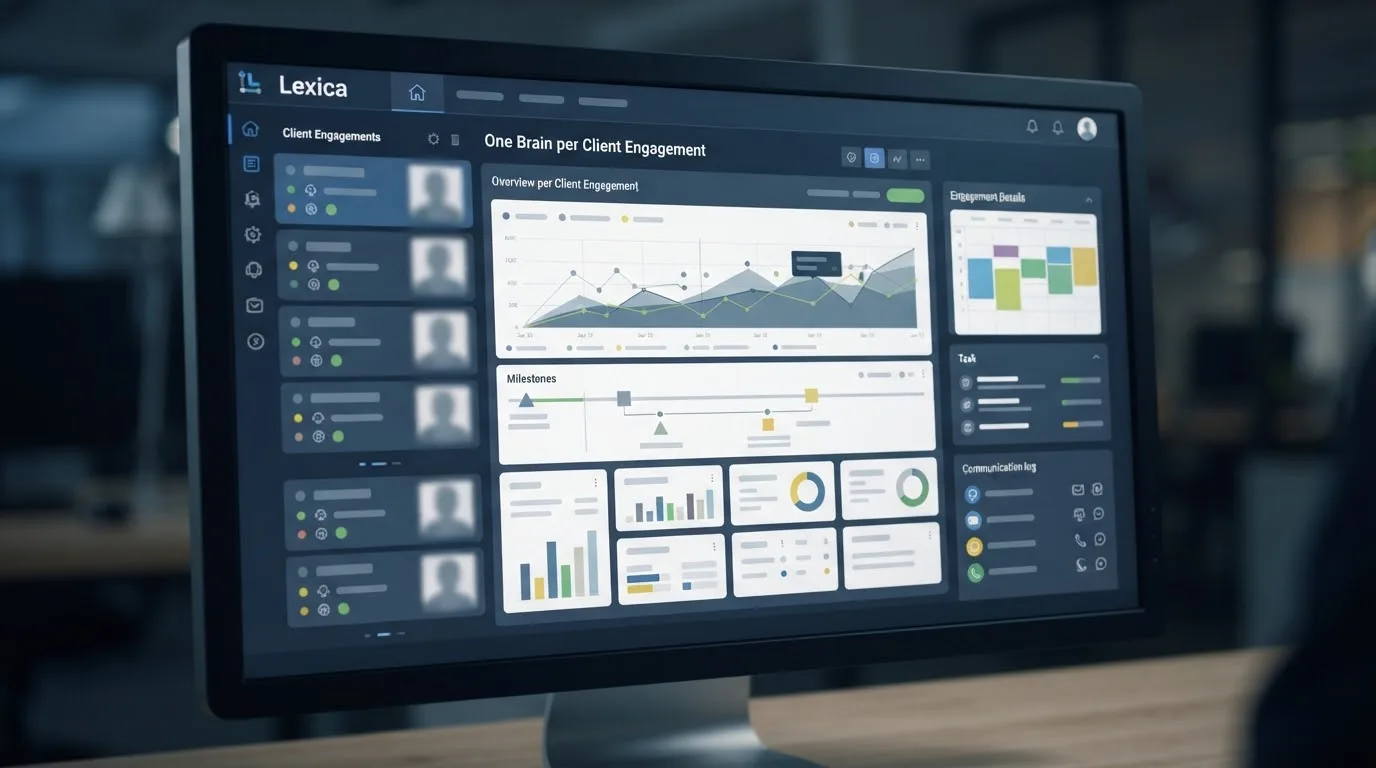
One Brain per Client Engagement
Context fragmentation is the silent killer of consulting productivity. When working across different client engagements—such as an agile tech rollout in Doha and a supply chain audit in Kuwait—mixing up terminology or company data can be catastrophic.
Maintaining a dedicated memory space for each project ensures that every AI model you use reads the exact same foundational documents, meeting transcripts, and brand guidelines. You simply state project parameters once, and every subsequent chat recalls those specific constraints without manual copy-pasting.
Confidentiality Rules
Client data security is non-negotiable in professional services. Under no circumstances should proprietary financial data, employee records, or unreleased strategic plans be exposed to models that use user prompts for public model training.
Enterprise-grade AI environments guarantee that your data is encrypted at rest and in transit, and strictly excluded from future model training pipelines. This ensures full compliance with regional data protection regulations across the Gulf region.
Tip: Always verify that your chosen AI workspace explicitly guarantees zero data retention for training purposes before uploading confidential client financials.
FAQ
How can AI help management consultants save time?
AI accelerates routine tasks like structuring workshop notes, drafting executive summaries, and organizing market research data, allowing consultants to focus on high-value client advisory and strategic synthesis.
Is client data secure when using AI for consulting work?
Yes, provided you use enterprise-grade platforms where data is encrypted and explicitly not used for training AI models, ensuring compliance with strict client confidentiality agreements.
Can different AI models be used within the same consulting project?
Yes. Many modern platforms allow you to switch between leading models like OpenAI GPT, Anthropic Claude, and Google Gemini mid-conversation while retaining full project context.
How do consultants prevent AI hallucinations in market research?
Consultants prevent hallucinations by using sourced research tools that link claims directly to verified URLs, government reports, and official financial filings rather than relying on parametric memory alone.
Key takeaways
Adopting AI in a consulting practice transforms how teams conduct research, draft proposals, and synthesize qualitative feedback, provided strict confidentiality protocols are maintained.
- Use dedicated project memory to keep context consistent across multiple client engagements.
- Rely on sourced research workflows to verify every market statistic and financial claim.
- Ensure complete data privacy by selecting platforms that do not use your inputs for training.
- Combine top-tier AI models in a single workspace to eliminate tool fatigue during tight deadlines.
If you’d rather not juggle three subscriptions, you can start free and streamline your entire advisory workflow, with a 7-day free Pro trial.