
Executive Summary
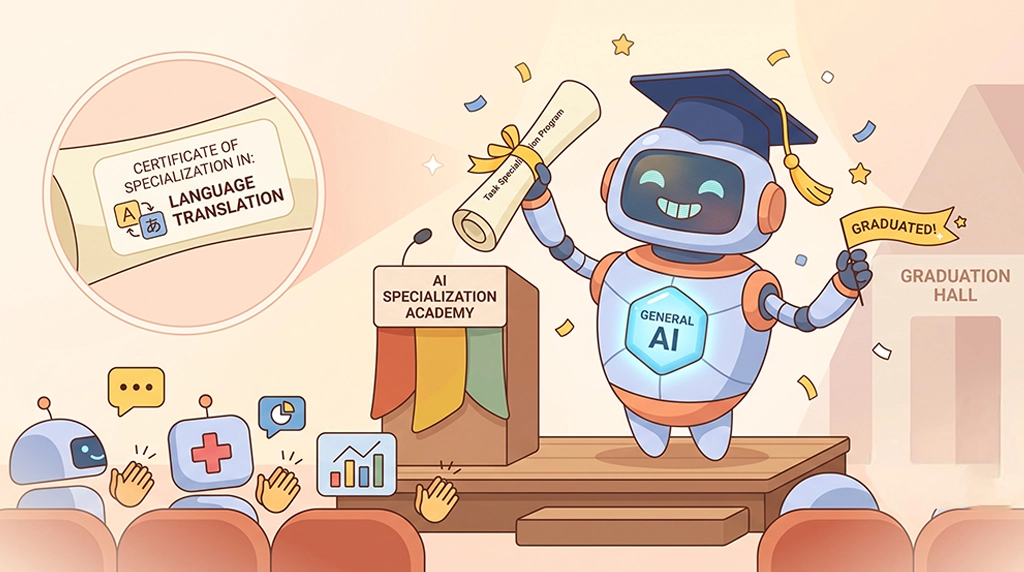
Fine-tuning is the process of taking an existing pre-trained model (a general AI base) and giving it extra training on a niche dataset to adapt it for a highly specific business task. While it sounds like the ultimate way to build a custom llm, recent data confirms that for 95% of everyday corporate needs, fine-tuning is a costly last resort rather than a first step. Most organizations in the GCC region can achieve identical or superior operational performance much faster and cheaper by optimizing their prompt strategy or integrating external corporate databases via Retrieval-Augmented Generation (RAG).
Whether you are managing retail supply chains in Riyadh or tracking maritime logistics at Jebel Ali Port, implementing artificial intelligence effectively requires choosing the right setup strategy. But with a confusing flood of technical jargon, many business leaders struggle to separate necessary infrastructure from expensive over-engineering. This guide breaks down the true role of customization, helping you maximize your operational ROI without wasting capital on complex engineering overhead.
Fine-Tuning in One Sentence
Fine-tuning is a highly specialized process where engineers take a massive, pre-trained model that already understands basic language structure and provide targeted additional training using an explicit niche dataset to permanently adapt its behavior, style, or technical domain expertise for a distinct business function.
To build a strong foundation in these underlying technologies before moving forward, explore our clear guides on understanding [what is artificial intelligence] and uncovering the foundational mechanics of [how machine learning works].
A Simple Analogy: Training a New Employee
Imagine you are looking to hire a senior corporate legal consultant for your enterprise headquarters in Dubai.
You wouldn’t hire a child and teach them how to read, write, and speak from scratch; that would require millions of dollars and decades of effort. Instead, you hire a university graduate who already possesses fluent language skills, understands broad historical facts, and knows how to write professional documents. This graduate is a pre-trained model.
When this new employee walks through your office doors, they do not yet know the internal quirks of your specific corporate culture, your legacy accounting formats, or your exact regional compliance guidelines.
- If you give them a clear, detailed instruction sheet at their desk every morning, that is fine-tuning vs prompting.
- If you point them to a filing cabinet full of localized company policy handbooks, that is fine-tuning vs RAG.
- But if you send them away to an intense, multi-month specialized law school to completely alter how their brain processes technical terminology, you are engaging in fine-tuning.
How Fine-Tuning Actually Works (Simplified)
To understand this process, we must first define two core components. A pre-trained model is a base system trained on vast, public web-scale data to understand basic syntax, logic, and general world facts. The specialized information we feed into it next is known as training data, which refers to a curated set of high-quality examples specifically organized to teach an AI system distinct patterns or corporate behaviors.
During initial development, a model learns millions of broad concepts. When an enterprise initiates a fine-tuning ai model workflow, engineers open up the underlying system and expose it to targeted internal data. This process alters the mathematical weights within the network, permanently reshaping how the system formats its tone, structures its programming logic, or handles specialized regional business vocabulary.
Fine-Tuning vs. Prompting vs. RAG
When business leaders seek to build a custom llm, they must evaluate three primary paths. Choosing the incorrect approach can result in significant waste of both engineering talent and operational budget.
To compare these options properly, review this clear breakdown of operational trade-offs:
| Strategy | Upfront Cost | Implementation Speed | Best For | Technical Skill Needed |
| Prompt Engineering | Ultra-Low | Near Instant | Quick adjustments, generic templates | Minimal |
| RAG (Knowledge Bridge) | Balanced | Days to Weeks | Connecting live company databases | Moderate |
| Model Fine-Tuning | Heavy Capital | Weeks to Months | Specialized tone, custom code styles | Expert |
1. Prompt Engineering (The Context Layer)
This approach involves writing explicit, clear instructions directly within your active workspace. It requires zero custom code or software development overhead. If you want a model to adopt a specific communication style or use standard regional terms, you simply tell it to do so in the prompt. To maximize your team’s immediate efficiency without code changes, read our guide on how to [write better prompts instead].
2. Retrieval-Augmented Generation (The Filing Cabinet)
RAG functions as an external knowledge search engine for your AI. Instead of trying to bake your entire corporate database permanently into the model’s brain, a RAG system reads your question, searches an external repository (like your local cloud database), pulls the exact document snippet needed, and hands it to the model. This is the optimal way to prevent hallucinations when dealing with rapidly shifting corporate information.
3. Structural Fine-Tuning (The Deep Brain Surgery)
Unlike the first two options, a fine-tuning ai model pipeline permanently changes how the core network behaves. It does not look up external files; instead, it incorporates the training patterns directly into its core weights. This makes it an ideal fit for teaching a system highly technical coding languages, unique industry nomenclature, or strict, unyielding stylistic guidelines that must be enforced across millions of customer interactions.
When You Actually Need Fine-Tuning (And When You Don’t)
When trying to determine exactly when to fine-tune an ai model, consider this clear rule of thumb: Fine-tune for formatting, style, and specialized tone; use RAG for facts, dynamic data, and knowledge updates.
You do not need a deep training pipeline if you just want to connect your system to your current inventory numbers, changing regional legal codes, or standard client files. Using RAG keeps your data fully secure, localized, and instantly updateable without spending thousands on cloud servers.
You only need to pursue a fine-tuning strategy when your software engineering teams must output highly specialized, custom code syntax, or when your compliance teams require a strict, tailored communication tone that standard models cannot reliably replicate via prompting alone.
To understand how underlying model architectures are trained and evaluated before customization, explore our comprehensive breakdown of [LLM basics].
Real-World Examples of Fine-Tuning
تصویر
To better understand how this specialization works in practice, let’s explore three concrete corporate use cases across the GCC economic landscape:
1. Financial Audit Automation in Riyadh
A major financial consultancy operating within Saudi Arabia needed an AI agent capable of drafting complex tax compliance audits that aligned perfectly with the latest guidelines issued by the Zakat, Tax and Customs Authority (ZATCA). Standard models consistently output generic Western financial formats. By building a custom llm using years of verified, anonymized historic audit data, the firm altered the model’s structural layout capabilities, allowing it to output flawlessly aligned corporate tax sheets automatically.
2. Shipping Logistics Optimization in Dubai
An international freight management firm based out of DP World in Dubai wanted to automate incoming shipping container manifest requests. The company possessed thousands of unique, non-standard logistical shorthand tags and custom routing acronyms unique to Middle Eastern trade hubs. By initiating a targeted fine-tuning pipeline, engineers trained a base model to read, parse, and translate this highly localized operational language with near-perfect accuracy.
3. Customer Service Localization
A premium luxury hospitality brand operating across Qatar and the UAE wanted their automated customer support chat systems to communicate using a highly distinct, deeply polite, and prestigious brand voice that matched their physical hotel concierge experience. Traditional systems felt overly direct or robotic. A specialized training process allowed the business to shape the model’s phrasing patterns, ensuring every automated response perfectly reflected their exact hospitality standards.
Common Misconceptions
- “Fine-tuning stops hallucinations completely.” This is inaccurate. Training can teach a model a specific structural format or tone, but it can still make up false facts if it doesn’t have access to an external search tool. For verifiable data retrieval, RAG remains essential.
- “You need millions of documents to start.” For a fine-tuning ai model pipeline, quality matters far more than raw size. Providing 500 perfectly curated, flawless examples of ideal corporate output will deliver vastly superior results compared to uploading 50,000 messy, unformatted text files.
- “Building a custom model is a one-time project.” Like any corporate asset, a custom llm requires ongoing support. As your corporate brand guidelines evolve, your engineering teams will need to update the baseline training data to keep the model fully aligned.
Key Takeaways
- Avoid over-engineering: For the vast majority of day-to-day business problems, optimizing your prompt architecture or utilizing RAG is significantly faster, cheaper, and safer.
- Understand the core definitions: A pre-trained model provides the foundational cognitive skills; your internal records provide the specialized direction.
- Focus on style and form: Only invest in structural weight adjustments when your application requires a highly distinct communication tone or specialized code formats that prompting fails to secure.
- Keep your stack flexible: Committing blindly to a single customized infrastructure can leave your enterprise locked into an outdated setup as the underlying market rapidly evolves.
FAQs
What is the difference between transfer learning and fine-tuning?
Transfer learning is a broad concept in machine learning where knowledge gained from solving one problem is applied to a different but related task. Fine-tuning is a specific, hands-on method used to execute transfer learning within large language models, where the internal weights of an existing system are carefully modified using a new dataset.
How much does it cost to build a custom llm via fine-tuning?
The financial investment can vary wildly based on model size, the volume of data, and your chosen cloud infrastructure. It can range from a few hundred dollars using hosted API providers to hundreds of thousands of dollars if you run massive, independent cluster architectures on high-end private servers.
What are “reasoning tokens” in modern models, and how do they affect enterprise billing?
Advanced systems generate internal “thinking” or reasoning tokens to process complex logic before outputting text. For enterprises, these internal tokens are fully billed as computing overhead, even if they do not appear in the final visible answer delivered to your employee. While this systematic chain-of-thought phase drastically reduces logical errors and hallucinations in heavy software engineering or financial auditing tasks, it can quietly spike your monthly API expenses if these premium reasoning models are used for everyday, simple administrative queries that do not require deep calculations.
Keep Your Business Future-Proof Without Over-Engineering
Don’t rush into high-overhead model development before evaluating your actual operational needs. With advanced management platforms like Lexika, your enterprise can instantly access a wide range of top-tier models already optimized for different technical tasks.
Before investing significant corporate capital into custom training pipelines, explore how dynamic model routing can solve your business challenges instantly. [From confusion in picking AI, be free. Our free guide, How to Choose the Best AI Model for Our Business, download.] Learn to structure your corporate technology stack efficiently, control your recurring API costs, and select the optimal model for your specific goals today.