
Executive Summary
In July 2026, there is no single “best” option among competing ai models; choice depends entirely on your enterprise KPIs, task complexity, and operational budgets. For advanced strategy, nuanced writing, and deep reasoning, Anthropic’s Claude family leads the market. For raw multi-modal speed, agentic ecosystem integration, and developer adoption, OpenAI’s GPT series remains dominant. Google’s Gemini excels in massive data ingestion via its industry-leading long-context window, while enterprise grade open-source ai models like DeepSeek and Meta’s Llama offer unprecedented cost-efficiency and on premise data sovereignty. To maximize ROI and prevent vendor lock in, leading enterprises in the GCC region are shifting away from rigid single-provider commitments toward dynamic architecture powered by smart routing.
According to recent data tracking digital transformation across the Middle East, AI adoption in the Gulf Cooperation Council (GCC) has shifted from experimental pilots to core operational infrastructure. Enterprises from logistics networks in Dubai to energy giants in Saudi Arabia are scaling generative technology to optimize supply chains, automate compliance, and drive bottom-line growth.
However, as the market matures, decision-makers face a critical challenge: a fragmented landscape of competing commercial systems. Choosing the wrong foundation can lead to blown IT budgets, poor integration, or massive migration costs down the road. This comprehensive LLM comparison breaks down the technical performance, cost structures, and strategic trade-offs of the best ai models 2026 has to offer.
What Is an AI Model, Quickly?
At its core, an artificial intelligence model is a mathematical algorithm trained on vast datasets to recognize patterns, predict outcomes, and generate human-like outputs. When discussing modern business applications, we are primarily focusing on Large Language Models (LLMs)—a subset trained on massive text, code, and multimedia datasets to execute complex cognitive workflows.
Understanding types of ai models is crucial for any enterprise strategy. These systems are no longer just basic text generators; they function as core computational engines capable of processing diverse inputs (text, audio, video, images) and executing multi-step autonomous workflows.
For a foundational breakdown of how these deep learning systems function structurally, read our dedicated guide: What is a Large Language Model (LLM)?
When building an enterprise AI stack, you will generally balance two primary types of ai models: closed-source proprietary systems and open-weight architectures. Proprietary software offers turnkey convenience and cutting-edge performance, while open-weight frameworks give your engineering teams full visibility to fine-tune code, customize weights, and secure confidential data within your own regional cloud firewalls.
The Major AI Model Families in 2026
The global landscape of frontier models is dominated by four major commercial tech giants alongside a rapidly expanding ecosystem of global open-source contributors. Let’s look closely at the defining technical capabilities and operational realities of each major family as of July 2026.
Claude (Anthropic)
Anthropic has consistently maintained its market position by prioritizing steering control, structural safety, and superior cognitive performance for complex enterprise workflows.
- Core Strengths: Claude is widely recognized as the industry benchmark for complex long-form writing, highly technical source code generation, and nuanced legal or financial data analysis. Its output is consistently corporate-ready, less prone to stylistic clichés, and highly capable of adhering to dense operational instructions.
- Operational Note: As a factual point of interest regarding availability, Anthropic’s Mythos-class Fable 5 model was briefly suspended between June 12 and June 30, 2026, under a temporary U.S. export-control regulatory order. The model was fully restored for global enterprise commercial access on July 1, 2026. Organizations using this tier can continue to leverage its high-end reasoning systems safely without further structural disruption.
GPT (OpenAI)
OpenAI remains the default market standard for general-purpose applications, agentic task execution, and seamless third-party developer integrations.
- Core Strengths: The GPT ecosystem stands out for its high throughput, fast processing speeds, and robust tool-use (function calling) capabilities. If your business is building autonomous agents that need to interact dynamically with legacy ERP systems or databases, OpenAI’s model infrastructure provides highly reliable stability.
- Business Fit: Ideal for client-facing customer support systems, high-speed text summarization pipelines, and broad-scale enterprise productivity suites.
Gemini (Google)
Google has built its competitive advantage around native multi-modality and a massive context capacity that leaves most competitors behind.
- Core Strengths: Gemini features a massive 2-million+ token context window. This makes it an unmatched solution for processing huge chunks of information at once, such as analyzing full hours of video footage, cross-referencing thousands of corporate PDF invoices simultaneously, or auditing entire codebases in a single prompt.
- Business Fit: Perfect for deep data analysis in asset-heavy industries, such as auditing technical compliance logs for oil and gas infrastructure in Saudi Arabia or parsing shipping manifests for logistics hubs in the UAE.
Grok (xAI)
xAI has rapidly iterated its architecture to build highly competitive systems optimized for real-time information processing and data synthesis.
- Core Strengths: Grok’s primary advantage is its live integration with real-time public data streams, allowing it to spot trends, monitor breaking news, and conduct market sentiment tracking faster than models constrained by older static training cutoffs.
- Business Fit: Highly valuable for marketing managers, trading desks, and public relations teams across the GCC who need up-to-the-minute situational awareness and real-time social intelligence.
Open-Source Models (DeepSeek, Llama, Qwen, GLM)
The enterprise calculus for ai models changed completely with the arrival of highly optimized, cost-efficient open-weight alternatives that match proprietary systems on major benchmarks.
- DeepSeek & Qwen: These highly sophisticated architectures offer incredibly efficient reasoning at a fraction of the operational cost of proprietary APIs. They have become core tools for international businesses looking to scale their computing workloads while minimizing subscription expenses.
- Llama (Meta): The bedrock of modern corporate open-source AI development. Running a fine-tuned Llama model on local cloud infrastructure provides complete data sovereignty—a non-negotiable requirement for government departments, defense applications, and healthcare institutions managing strict data residency laws within the GCC region.
To learn more about deploying these flexible, non-proprietary assets within your organization, read our deep dive: [Best Open-Source AI for Commercial Use].
How These Models Compare, By Task
To maximize the business value of your technology investments, avoid relying blindly on a single composite global metric on an ai model leaderboard. Real business value comes from matching specific corporate tasks to the model best optimized to solve them.
The following comprehensive llm comparison table outlines the real-world performance tiers across standard enterprise workflows as of July 2026:
| Model Family / Tier | Best For | Coding Performance | Writing & Reasoning | Context Window | Relative API Cost |
| Claude 4.x / Fable | Complex Legal, Advanced Engineering | Gold Standard | Industry Leader | 200k Tokens | Premium |
| GPT-5 / Omnis | Real-time Agents, High-volume API | Excellent | Very Good | 128k Tokens | Balanced |
| Gemini 3.x Ultra | Document Audits, Video Analytics | Good | Good | 2M+ Tokens | Balanced |
| Grok 4.x | Real-time Tracking, Trend Synthesis | Good | Very Good | 128k Tokens | Balanced |
| DeepSeek-V3/R1 | Low-cost High-volume Pipelines | Excellent | Excellent | 128k Tokens | Ultra-Low |
| Llama 3.x (70B+) | Private Local Deployments, Security | Very Good | Good | Up to 128kFree | (Self-Hosted) |
Best for Coding
When answering which ai model is best for coding, software engineering pipelines require a clear distinction between basic syntax completion and complex multi-file architectural planning.
- Top Performers: Claude and DeepSeek lead the industry on formal ai model benchmarks like SWE-bench. They excel at identifying edge-case bugs, writing comprehensive unit tests, and refactoring old codebases.
- GCC Business Case: A regional financial institution based in the Dubai International Financial Centre (DIFC) used these advanced coding capabilities to automate legacy system migrations, accelerating their development sprint cycles by nearly 40%.
Best for Writing & Reasoning
For strategic business tasks, generic, robotic-sounding text generation is no longer sufficient. Modern enterprises need deep conceptual understanding, clear logic, and a refined tone.
- Top Performers: Anthropic’s Claude continues to dominate the writing and reasoning category. It avoids formulaic introductory fluff, catches subtle context in dense records, and produces highly analytical business documentation.
- GCC Business Case: Large advisory groups in Riyadh regularly use these reasoning systems to draft initial versions of complex commercial real estate investment proposals, ensuring all regulatory compliance points are addressed smoothly.
Best for Multimodal & Long Context
Modern business information isn’t just plain text; it’s spread across lengthy video recordings, quarterly financial spreadsheets, and messy PDF scans.
- Top Performer: Google’s Gemini family remains the absolute leader in large-scale data ingestion due to its massive context window.
- GCC Business Case: A major shipping operator at DP World in Dubai uses Gemini’s long-context system to analyze multiple hours of drone security footage and maritime shipping logs simultaneously, flags operational bottlenecks, and cuts down cargo transit turnaround times.
Cheapest / Best Value
Scaling commercial text processing tools across thousands of employees can quickly lead to high API costs if not managed carefully.
- Top Performer: DeepSeek and open-source models like Llama have fundamentally reshaped the economics of artificial intelligence by offering near-frontier performance at a tiny fraction of the cost of legacy systems.
- GCC Business Case: An e-commerce platform operating across the GCC switched its customer sentiment analysis and review processing pipeline over to hosted open-weight systems, dropping its monthly API expenses by over 70% without sacrificing output quality.
To see how these specific pricing structures and output comparisons play out in direct head-to-head testing, check out our granular breakdown: [DeepSeek vs ChatGPT].
Proprietary vs Open-Source: Which Should You Use?
Choosing between commercial platforms and open-source software is one of the most critical structural decisions an enterprise technology team will make.
Proprietary solutions are ideal for teams that want to get up and running immediately with zero server maintenance, minimal engineering overhead, and instant access to the latest product features.
Conversely, open-source software is the go-to path for organizations focused on long-term data privacy, customization, and cost control. By running these frameworks on your own local cloud infrastructure, your business retains total control over its intellectual property, escapes recurring monthly license fees, and easily satisfies regional data storage regulations.
The Role of Quantization in Enterprise Strategy
As organizations look deeper into the economics of open-source ai models, understanding the concept of quantization becomes essential for long-term computing efficiency. In raw form, the absolute baseline parameters of top-tier open-weight architectures require massive server arrays and multiple specialized hardware chips just to process a single operational prompt. To bypass these high infrastructure demands, corporate technology teams utilize quantization a technical compression process that reduces the mathematical precision of the model’s weights.
When executed correctly, quantization allows a massive framework to run smoothly on smaller, significantly cheaper cloud server configurations, drastically dropping the cost of hosting. However, this optimization introduces a critical corporate trade-off. Over compressing a system can lead to a subtle degradation in performance, causing a drop in logical reasoning accuracy and behavioral consistency during complex corporate tasks.
For enterprise decision-makers, the goal is finding the exact efficiency sweet spot. Striking the right balance between compressed hardware costs and absolute processing accuracy ensures your custom infrastructure remains highly profitable without sacrificing the high-quality automated output your workflows demand.
Do You Really Need to Pick Just One?
Many corporate IT departments fall into the trap of looking for a single system to handle all of their business operations. As a result, they often end up paying for multiple separate subscriptions for different teams:
- Marketing teams insist on premium Claude access for high-end copywriting.
- Engineering departments request separate corporate seats for specialized coding tools.
- Data analysts demand Google subscriptions to process massive long-context files.
Juggling 3 or 4 separate commercial platforms leads to fragmented data silos, major security challenges for IT managers, and runaway software costs.
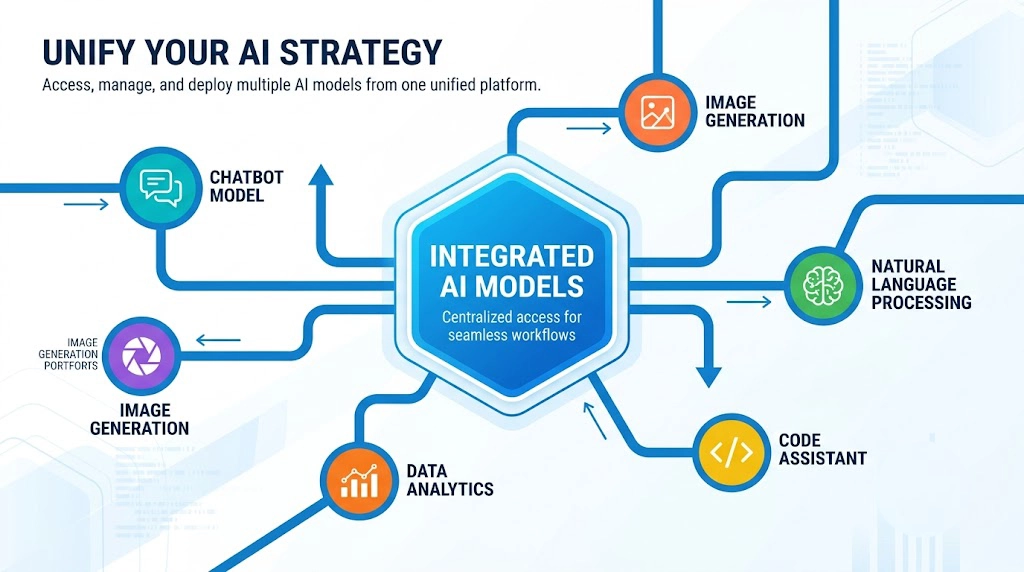
This exact challenge is why modern organizations are moving away from single-vendor dependence and embracing smart routing architectures. Instead of forcing a single model to handle every task—or overpaying for several individual subscriptions—enterprises are utilizing intelligent middleware platforms like Lexika to manage their workloads dynamically.
Through smart routing, an inbound query is automatically evaluated by a lightweight manager layer. Simple text tasks go to low-cost, high-speed open-source systems, heavy coding challenges route directly to Claude, and multi-modal assignments hand off to Gemini. This approach gives your teams access to the absolute best tools for every task, simplifies corporate billing down to a single point, and keeps your monthly computing costs highly optimized.
To learn how an automated routing architecture can streamline your infrastructure and lower operational overhead, read our introductory guide: [What is Smart Routing?].
How to Choose the Right Model for Your Use Case
To find the perfect fit for your operational needs, ask your project team these four practical deployment questions:
- What is the core task? If you are processing massive log files or long video feeds, focus on Gemini. For high-end creative work or technical legal analysis, look toward Claude.
- What are your data privacy requirements? If you are handling sensitive medical histories or confidential government records that cannot leave the region, host open-weight architectures like Llama inside your own local data centers.
- What is your development budget? For high-volume, repetitive workflows like processing millions of customer reviews, using open-source options or highly efficient reasoning engines will save your business significant capital.
- Are you worried about vendor lock-in? Building your entire software infrastructure around a single proprietary API leaves your business vulnerable to unexpected price changes, service outages, or shifting corporate strategies. Utilizing an abstract management platform ensures your system remains flexible and future-proof.
Key Takeaways
- Match systems to specific tasks: Avoid chasing a single crown on a global ai model leaderboard. True business value comes from using the right tool for the right job.
- Open-source is highly competitive: Modern open-weight designs provide top-tier performance while giving your business full control over data privacy and total cost of ownership.
- Beware subscription fatigue: Juggling several disconnected platforms creates security risks and unpredictable IT spending.
- The future is multi-model: Integrating an intelligent orchestration layer lets businesses combine the unique advantages of different architectures while keeping operational costs completely optimized.
FAQs
How often do the rankings change for these top systems?
The competitive landscape shifts almost monthly as provider updates roll out. The relative performance rankings and capabilities outlined in this guide reflect the market landscape as of July 2026. Enterprise tech teams should regularly consult active live tracking resources like the Vellum or LLM-Stats leaderboards to stay up to date on new releases.
What is the primary difference between open-weight and closed-source systems?
Closed-source proprietary options are managed, hosted, and updated directly by the vendor, accessible through a simple API or web interface. Open-weight choices give businesses the freedom to download the model’s core components, run them on private cloud servers, and customize the code to fit their unique security needs.
How do regional data sovereignty laws in the GCC impact the choice between proprietary APIs and open-source deployments?
For enterprises operating within the GCC, particularly in Saudi Arabia and the UAE, data sovereignty is a strict legal mandate. Regulatory bodies have established rigorous frameworks governing where sensitive data can be processed. When an enterprise chooses a proprietary, closed-weight model family, the data sent via the API typically transits through global cloud infrastructures hosted outside geographic boundaries.
This regulatory reality has driven the adoption of high-performance open-source systems. By leveraging open-weight architectures, regional enterprises can fully download the model parameters and establish self-hosted deployments compiled entirely within regional cloud availability zones.
What are the hidden infrastructure costs associated with self-hosting open-source frontier models versus paying for managed proprietary tokens?
While the token pricing of open-source architectures appears disruptive on paper, executives must conduct a rigorous Total Cost of Ownership analysis. To host an open-weight model capable of true frontier-level reasoning, an enterprise requires high-end AI hardware accelerators, such as NVIDIA’s specialized GPU configurations.
The hidden cost structure includes compute provisioning for idle capacity, engineering overhead for MLOps staff, and performance optimization engineering. Therefore, for organizations processing low-to-medium transaction volumes, utilizing an established multi-model platform or dynamic smart routing middleware typically yields a far higher ROI and eliminates infrastructure complexity.
How do intelligent orchestration platforms help reduce enterprise costs?
Instead of routing every single corporate prompt to an expensive premium system, an intelligent orchestration platform reviews the complexity of each incoming request. It directs simple tasks to faster, low-cost alternatives, ensuring you only pay for high-end processing power when a task truly demands it.
What are “reasoning tokens” in 2026 models, and how do they affect enterprise billing?
In 2026, advanced systems like DeepSeek-R1 or specialized tiers of Claude and GPT generate internal “thinking” or reasoning tokens to solve complex logic before outputting text. For enterprises, these tokens are billed even if they do not appear in the final answer. While this drastically reduces errors in heavy coding or auditing tasks, it can spike costs if used for everyday administrative queries that do not require deep calculation.
How does context caching help control costs when analyzing large databases?
Context caching allows an enterprise to upload a massive foundational document—like a legal manual or database schema—and store its processed state in the system’s memory layer. Future employee queries reference this pre-scanned cache instead of processing the entire file from scratch every single time. This technology speeds up response times and can lower input API expenses by up to 80% for high-volume applications.
Optimize Your AI Workloads Instantly
Stop overpaying for a patchwork of separate software licenses and trying to force a single system to do everything. Compare these models side-by-side and instantly start exploring on Lexika. Our unified platform integrates smoothly with the world’s leading architectures, helping your business lower its technology costs, protect its data privacy, and deploy intelligent automation across every department.
