
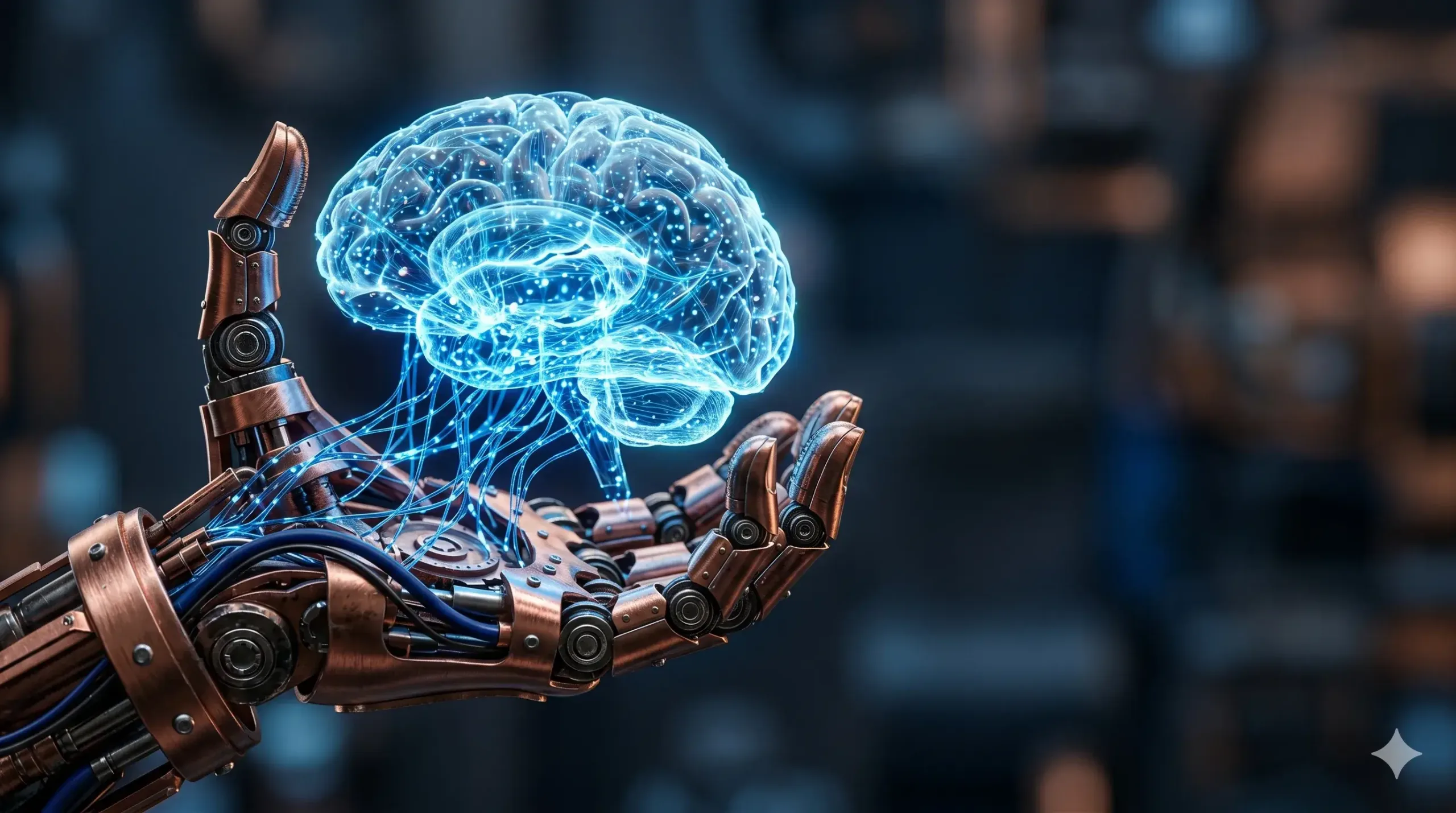
Manager’s Summary
The fundamental difference between AI and robots lies in their nature: AI is the brain (software), while robots are the body (hardware). Robots are physical machines designed for tasks, but many operate on simple, pre-programmed instructions without true intelligence. Artificial Intelligence, conversely, equips systems with the ability to learn, reason, and make autonomous decisions. This synergy of intelligent software with physical hardware is what creates “smart robots” capable of adapting to their environment and driving significant business value, especially in the GCC region.
Intelligent Software vs. Physical Hardware
To truly grasp the difference between AI and robots, it’s crucial to distinguish between the digital realm of intelligence and the physical world of action. Artificial Intelligence (AI) encompasses the technologies that empower computers and machines to simulate human cognitive functions like learning, comprehension, reasoning, and decision-making. It’s the intelligent software that drives sophisticated behavior.
On the other side, robotics is a specialized field of engineering focused on the design, construction, and operation of physical machines—robots—built to execute manual tasks. While an AI can exist purely as code, perhaps running on a powerful server or accessed via a platform like lexika, a robot is a tangible entity designed to interact with and manipulate the physical world. Think of AI as the mind and robotics as the body; they can exist separately but are most powerful when integrated.

Why Not Every Robot is Smart?
Many people confuse automation with Artificial Intelligence. In industrial sectors across the GCC, such as the massive logistics hubs in the UAE, you will find thousands of robots. However, many are “dumb” robots.
Standard Robots
These follow a fixed algorithm or a set of rules. For example, a robotic arm in a car factory that moves a part from point A to point B is a robot, but it doesn’t “think”. If the part is missing, the arm will continue to move through empty air.
Smart Robots
These are the result of the intersection between robotics and AI. A smart robot uses sensors and AI to perceive its environment and adapt. If an obstacle appears in a smart warehouse in Riyadh, the AI-powered robot recalculates its path in real-time.
Comparison Table: AI vs. Robotics in Focus
| Feature | Artificial Intelligence (AI) | Robotics |
| Nature | Digital / Software | Physical / Hardware |
| Function | Thinking, reasoning, and data analysis | Physical movement and task execution |
| Learning | Can improve through machine learning | Requires physical reconfiguration or new code |
| Autonomy | Decision-making autonomy | Task-execution autonomy |
The Power of Intersection: Driving Innovation in the GCC
The most transformative advancements in technology today occur when AI and robotics converge. This powerful combination is reshaping industries and driving significant return on investment (ROI) for businesses across the Gulf region:
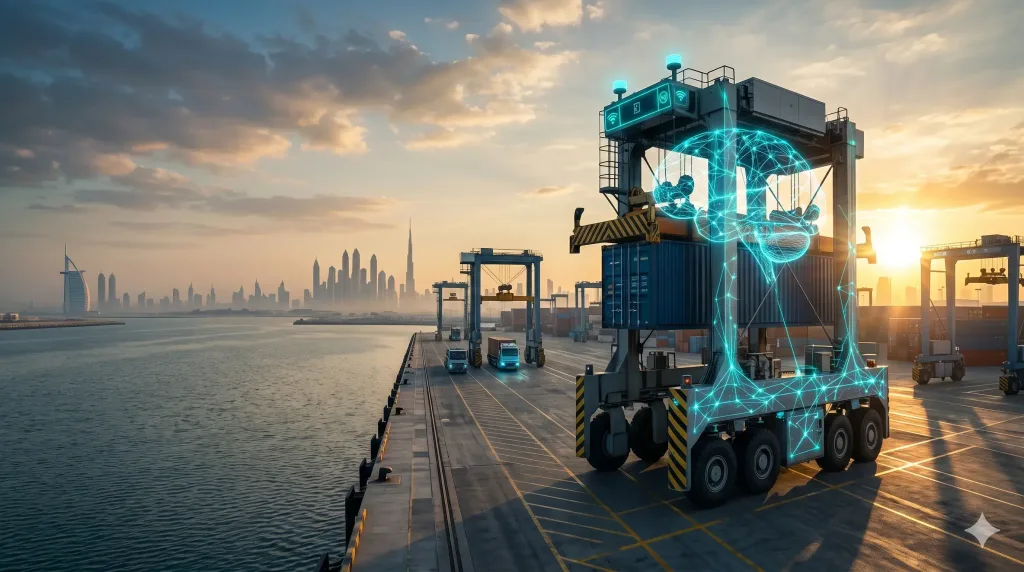
- Logistics & Ports: Leading facilities like DP World employ autonomous vehicles (robots) guided by AI for navigation within complex shipping yards. This synergy drastically reduces human error, optimizes cargo handling, and lowers operational costs in demanding environments. AI enables these robots to make real-time routing decisions based on dynamic yard conditions.
- Oil & Gas: In critical sectors within Saudi Arabia and Qatar, AI-driven drones—essentially flying robots—are used for inspecting vast pipelines and infrastructure. The integration of intelligent software with hardware allows these drones not only to fly autonomously but also to utilize computer vision (an AI capability) to automatically identify potential issues like leaks, corrosion, or structural weaknesses, enabling proactive maintenance and enhancing safety.
- Customer Service & Hospitality: Across the vibrant hospitality sector in Dubai and other GCC cities, AI-powered social robots are moving beyond simple, pre programmed greetings. These robots can recognize human emotions through facial cues, engage in more natural conversations, and provide personalized guest experiences, showcasing a higher level of interaction than traditional automated systems.
- Manufacturing & Automation: In factories throughout the region, advanced robotic arms integrated with AI are capable of much more than repetitive assembly. They can adapt to variations in product placement, perform quality control checks using visual inspection, and even collaborate safely with human workers on the assembly line, thanks to AI-driven spatial awareness and decision-making.

The most transformative advancements in technology today occur when AI and robotics converge. This powerful combination is reshaping industries and driving significant return on investment (ROI) for businesses across the Gulf region. According to McKinsey, AI could contribute up to $150 billion to the Middle East economy by 2030, with a significant portion driven by AI-robotics integration across logistics, energy, and manufacturing sectors. Similarly, Gartner reports that by 2026, more than 50% of large enterprises in the GCC will have deployed AI-integrated robotics in their operations, up from less than 20% in 2023. These figures underscore the massive economic potential of combining intelligent software with physical automation—a strategic opportunity that GCC businesses cannot afford to ignore.
Summary: Choosing the Right Strategy for Digital Transformation
For business leaders across the GCC, understanding the fundamental difference between AI and robots is a critical first step toward successful digital transformation. While robots excel at automating physical labor and repetitive tasks, it is Artificial Intelligence that provides the strategic intelligence—the ability to learn, reason, and analyze data—which drives competitive advantage and unlocks new opportunities.
Whether your goal is to automate a complex warehouse operation, enhance customer interactions with intelligent software, or simply leverage the latest large language models (LLMs) to gain deeper market insights, the overarching aim is to simplify complexity and accelerate business growth. By understanding where AI fits into the picture, you can make informed decisions about technology adoption that align with your strategic objectives.
Ready to find the best AI for your work?
Don’t limit yourself to one model: With Intelika, you can freely switch between the world’s best AI models—like GPT-4, Claude 3, and Gemini—in one place without changing your code. Optimize your costs and find the perfect “brain” for your business operations.
[Explore lexika’s Unified AI Platform]
Frequently Asked Questions (FAQ)
1. Can you have AI without a robot?
Yes. Most AI today exists as software, such as chatbots or predictive analytics tools used by marketing managers to optimize spend.
2. Is a self-driving car a robot or an AI?
It is both. The car is the robotic hardware, but the system that navigates and makes split-second safety decisions is the Artificial Intelligence.
3. What is the main benefit of “Smart” automation?
Smart automation reduces the need for human intervention in unpredictable environments, leading to greater precision and long-term cost savings.
4. How can a business start using AI without expensive hardware?
By focusing on the software side. You can explore various models and their capabilities on the lexika Pricing page to see how cloud-based AI can enhance your existing workflows.
5. Are robots dangerous without AI?
Standard robots are only dangerous if their path is obstructed because they lack the sight and reasoning provided by AI to stop or move around obstacles.
6. What is the difference between AI automation and robotic automation?
AI automation handles data-driven tasks like analysis and decision-making. Robotic automation executes physical tasks like lifting or assembling. Together, they create the most powerful automation systems.
7. Does AI need robotics to be useful for my business?
Not at all. Many businesses benefit from AI purely through software—chatbots, data analytics, and predictive models. Robotics adds value only when physical task execution is required.
